
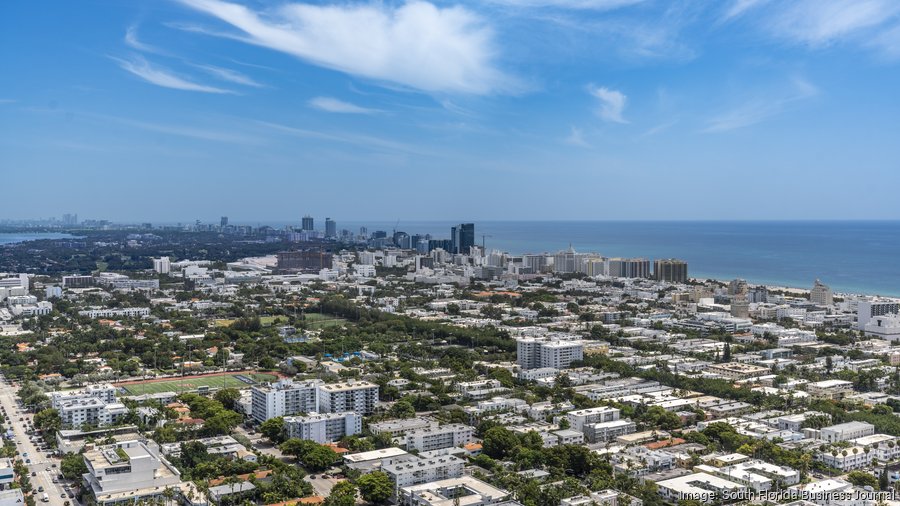
Cover image source: South Florida Business Journal
Miami Beach officials are set to consider legal action against Florida’s Live Local Act, a housing law that lets qualifying developers bypass parts of local zoning rules in exchange for delivering affordable and workforce housing. For buyers, this is more than a political fight. It is a supply story, a pricing story, and a negotiation story in one of the most expensive coastal markets in the country.
As the South Florida Business Journal reported, city commissioners are weighing resolutions that could challenge the law in court, seek repeal or amendment from the Legislature, and increase oversight of projects filed under the statute. In plain English, Miami Beach is pushing back on a law designed to force more housing production in places that have historically made it hard to build.
What the Live Local Act Actually Changes
The Live Local Act was designed to accelerate affordable and workforce housing by giving qualified projects more room to move through the approval process. According to the Business Journal report, developers can pursue multifamily projects at the maximum density allowed locally and up to the height of the tallest building within a mile, so long as at least 40% of the units are reserved for households earning up to 120% of area median income.
That matters because buyers in constrained coastal markets do not just compete with each other. They compete with years of limited supply, slow approvals, and neighborhood-by-neighborhood resistance to additional housing.
Why Buyers in Miami Beach Should Care
In a market like Miami Beach, supply is the whole game. When more projects move forward, buyers gain optionality. When approvals stall, the opposite happens: existing inventory carries more power, owners hold firmer on price, and buyers have fewer chances to create leverage.
The article notes there are currently five approved Live Local Act projects in Miami Beach that would add 268 income-restricted units and 107 market-rate units. It also says 12 more applications are under review, representing another 729 income-restricted units and 907 market-rate units if built. That is real volume for an already constrained market.
What This Means for Buyer Strategy Right Now
Buyers do not control Tallahassee or Miami Beach City Hall. But they do control timing, representation, and the math of the deal. In South Florida, that matters more than ever.
- Watch where new housing can actually get delivered. Policy fights do not hit every neighborhood equally. Some submarkets will remain supply-starved, while others will see more new inventory and better negotiation windows.
- Focus on total cost, not just list price. In expensive coastal markets, the fee structure on your own representation can move the needle by thousands or tens of thousands of dollars.
- Use broker-level guidance when the policy environment is changing. When rules, approvals, and local resistance all affect future supply, buyers need more than door-opening. They need someone who can read the market structurally.
Why Representation Math Matters Even More in South Florida
On a $1.5 million home, a traditional 2.5% buyer-agent commission is $37,500. Under ShopProp’s flat-fee structure, buyer representation is priced separately, and when a seller offers buyer-agent compensation, much of the difference can stay with the buyer instead of disappearing into a percentage model.
That is especially important in South Florida, where buyers are already balancing insurance costs, taxes, reserves, and high absolute purchase prices. Saving money on representation does not solve a supply crunch, but it does improve flexibility at closing and can strengthen a buyer’s overall position.
Our Read on the Bigger Picture
Miami Beach’s pushback is understandable. The city is dense, geographically constrained, and highly sensitive to infrastructure and flood-related concerns. But the state’s argument is also real: if every local government agrees Florida needs more housing but wants it built somewhere else, the shortage does not improve.
For buyers, the practical lesson is simple. Expect policy fights around housing to continue. Expect constrained, high-demand markets to stay competitive. And expect the winners to be the buyers who understand both the neighborhood-level math and the transaction-level math.
Where to Go From Here
If you are buying in South Florida, start with the numbers:
- Calculate your potential savings
- Miami Beach savings page
- Miami savings page
- Fort Lauderdale savings page
- Compare ShopProp to a Florida flat-fee competitor
ShopProp is licensed in Florida and built for buyers who want full-service representation, transparent pricing, and managing broker leadership on every transaction.
Source: South Florida Business Journal, “Miami Beach could urge repeal of Live Local Act, set to weigh legal action,” published Oct. 12, 2026.