
The debate over the Marina Safeway redevelopment raises a question beyond building height and the number of apartments: does a streamlined housing approval deprive nearby residents of a right to a hearing?
That is the question raised in the Reddit summary I shared about the proposed 848-home development. It deserves a careful explanation. A constitutional argument, a request to dismiss a case and a court ruling are three different things.
Scope note: This is an explainer of the arguments described in my Reddit summary, alongside published project information and general legal references. It is not an independently verified account of the court docket, the complete filings or the case's current outcome.
The project behind the debate
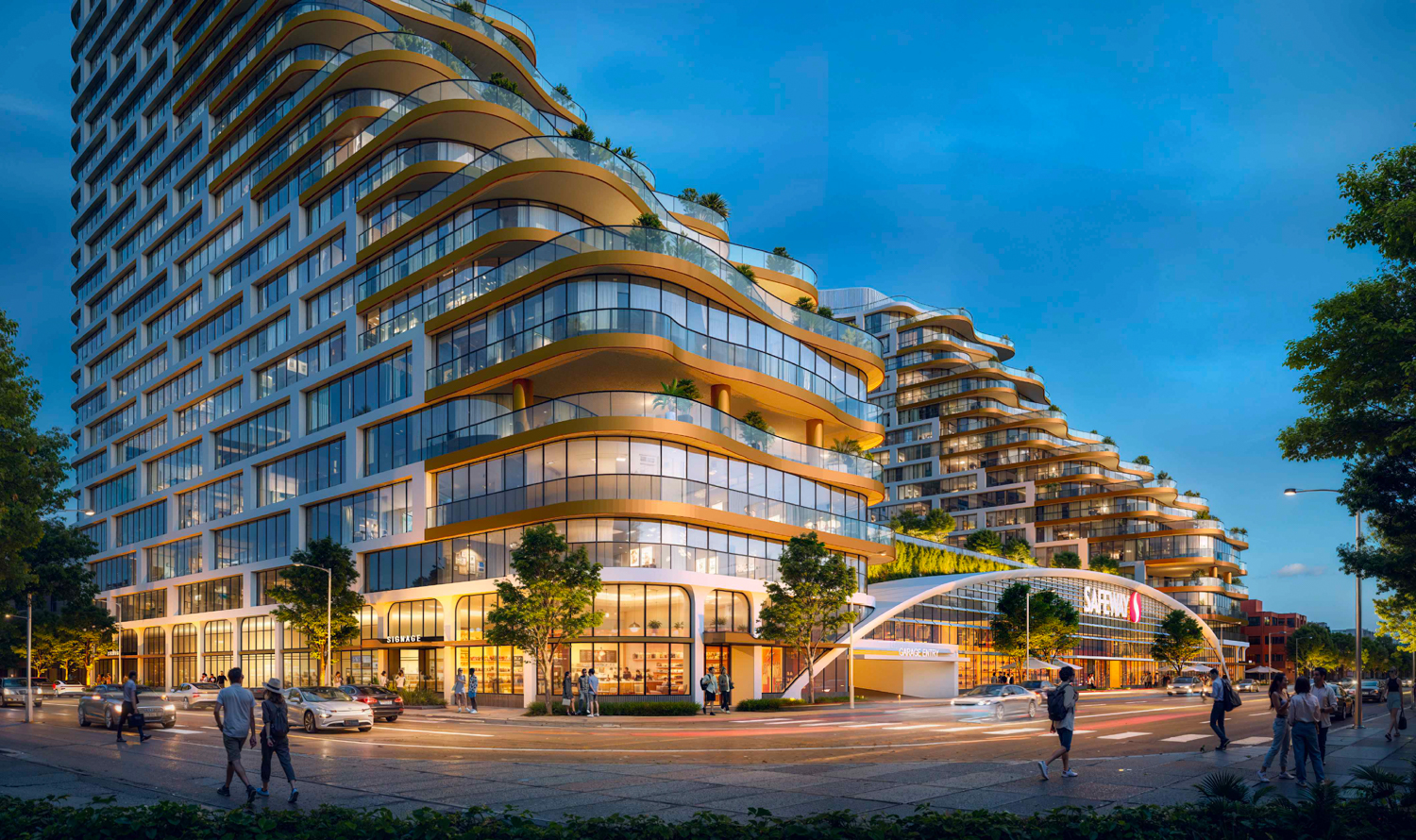
In its July 16 project update, San Francisco YIMBY reported revised plans for 15 Marina Boulevard: 848 homes, including 86 deed-restricted affordable homes, and a replacement Safeway. The report identifies Align Real Estate as the project sponsor filing on behalf of property owner Albertsons Companies, with design by Arquitectonica.
Those are proposed homes, not delivered housing. The July report also said a construction cost and timeline had not been provided. That dated report should not be mistaken for a current construction schedule.
Our September article covered the broader project and opposition. This follow-up focuses on how to read the due-process argument, rather than repeating that project overview.
What the due-process argument is about
In my Reddit summary, I described opponents as arguing that approval without a traditional public hearing deprives nearby residents of rights protected by the Fourteenth Amendment. I also described the developer's response as disputing a constitutional entitlement to a hearing over another property's qualifying building permit.
These are descriptions of opposing positions in that summary, not conclusions about which side has the stronger legal case. Without independently reviewing the filings and orders, this article does not establish the precise claims pleaded, the date or scope of a dismissal request, or whether a judge has resolved any of those issues.
The Fourteenth Amendment's text says a state may not deprive a person of life, liberty or property without due process of law. Applying that protection to a particular land-use dispute requires more than pointing to the amendment's name. The relevant interests, approval process and legal arguments matter.
A disagreement about whether a project is good for the neighborhood is therefore not the same question as whether the challenged process violates the Constitution. This explainer does not decide either question.
A dismissal request is not a court ruling
As Cornell's Legal Information Institute explains, a motion to dismiss is a request for a court to dismiss a case. There are different possible grounds for such a request.
The practical reading rule is simple: distinguish what a party asks the judge to do from what the judge actually orders. A summary of a dismissal argument, on its own, does not establish that a lawsuit has ended, that a project is cleared to start construction, or that residents' constitutional rights were violated.
What buyers, renters and neighbors should watch
- An actual court order: Read what the judge decided and which claims or parties the decision covers, rather than treating a party's filing as the result.
- Current project documents: Check the latest approved plans and permits before relying on a particular building design or unit count.
- A supported construction schedule: Treat a proposal, an approval and a construction start as separate milestones. Do not make a move or lease decision around a date that has not been established.
- Specific local effects: For a nearby property, ask about access, construction activity and planned amenities. An 848-home proposal alone is not enough to predict the direction of an individual home's value.
The useful takeaway is not that either side has already won. It is that the legal arguments, the planning record and the delivery timetable need to be considered separately.
If you are evaluating a home near a proposed development, ShopProp can help you organize the property questions to investigate. Questions about legal rights or litigation should go to a qualified attorney. This article is general information, not legal advice.
Sources and image credit
The discussion of the parties' positions comes from Rob Luecke Jr.'s ShopProp summary posted to r/bayarea and supplied for this article. The underlying Chronicle article and court filings were not independently reviewed. Project figures are attributed to San Francisco YIMBY's July 16, 2026 reporting; the constitutional text and motion definition are linked above.
Cover: Architectural rendering by Arquitectonica, via San Francisco YIMBY. It depicts a proposed design, not a photograph of a completed building.